
If you’ve been telling yourself, “I’ll start when I have more time,” let this be your sign: you don’t need perfect conditions. You just need a simple, repeatable full-body home workout that feels doable, even on your busiest week.
This routine is built for true beginners (or anyone returning after a long break). It’s straightforward, low-pressure, and easy to scale—so you can start where you are and build momentum without burning out.
Important note: I’m not a doctor. If you have chest pain, dizziness, uncontrolled blood pressure, you’re pregnant/postpartum, or you’re recovering from an injury, check with a healthcare professional before starting. Stop if you feel sharp pain or anything that feels unsafe.
► Table of Contents
Full Body Home Workout at a Glance

Time options: 10 minutes (quick), 20 minutes (standard), 30 minutes (full)
Equipment: optional (none required; a chair helps; light dumbbells or a backpack are a bonus)
Style: strength + core + gentle cardio (low impact)
Best for: building consistency, basic strength, and full-body conditioning at home
Recommended Articles 👇
👉 The Hidden Vitamin and Mineral Gaps That Might Be Blocking Your Weight Loss
👉 You Have This Resistance; That’s Why You’re Not Losing Weight.
👉 Exercise and Weight Loss: Building an Effective Fitness Routine
What Makes This a Good Beginner Full Body Home Workout?
A great beginner routine does two things:
1) It trains your whole body using simple movement patterns (so you build balanced strength).
2) It’s easy enough to repeat consistently—because consistency is where results come from.
Many beginner-friendly workouts that rank well are built around foundational moves (think squats, lunges, push-ups, planks, glute bridges) and keep the structure simple: circuits or supersets/trisets, a clear number of rounds, and easy ways to scale the difficulty up or down.
How Hard Should You Go?
For beginners, “all out” is not the goal. “Repeatable” is the goal.
Use one (or both) of these beginner-friendly intensity checks:
Talk Test (super simple)
During moderate-intensity work, you should be able to talk but not sing. If you can only get out a few words before needing a breath, you’ve drifted into vigorous intensity.
RPE (Rate of Perceived Exertion) 0–10
RPE is a self-rating of effort. Cleveland Clinic describes RPE as a 0–10 scale used to measure how hard your body feels like it’s working.
In this full-body home workout: – Strength moves should feel like RPE 6–7 by the end of the set (challenging, but you can keep good form). – The “cardio-ish” move should feel like RPE 5–7 (breathing up, but still controlled).
Warm-Up
Do this quick warm-up for 3–5 minutes before your full-body home workout.
- March in place (30 seconds)
- Arm circles (20 seconds forward, 20 seconds backward)
- Hip circles (20 seconds each direction)
- Chair squats (6–8 slow reps)
- Hands-on-wall incline push-ups (6 slow reps)
- Shoulder blade squeezes (10 reps: pull shoulders back and down)
This mirrors what many beginner plans recommend: warm up briefly so you’re not starting cold.
The Full Body Home Workout for Beginners
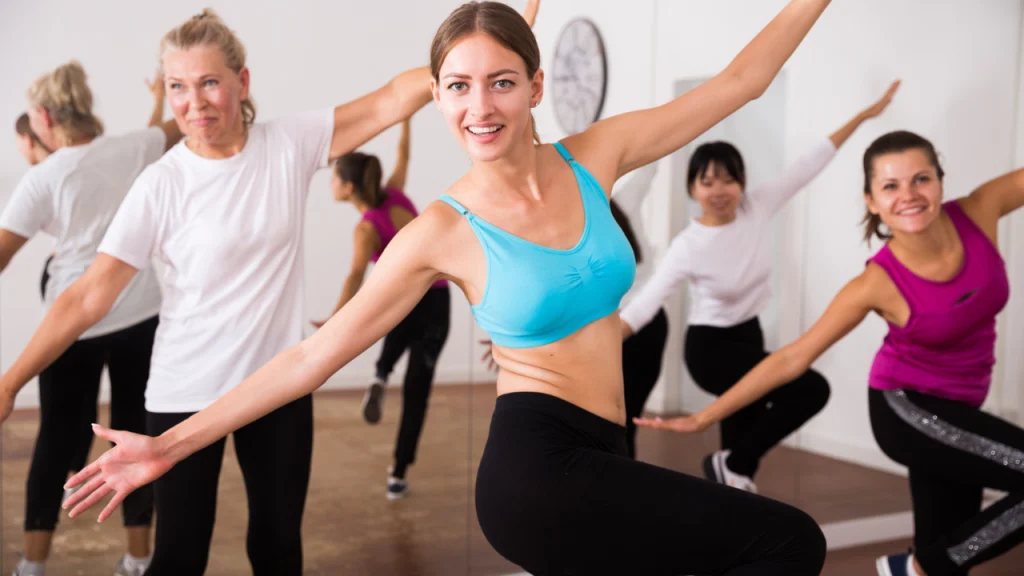
You’ll do 8 exercises as a circuit.
Choose your version: – 10 minutes: 1 round
– 20 minutes: 2 rounds
– 30 minutes: 3 rounds
Timing: Work 40 seconds, rest 20 seconds (or move at a steady pace and rest as needed).
Rest between rounds: Take 60–90 seconds after each round.
If you’re brand new, it’s normal to rest more. Your job is to keep form clean.
Exercise list (8 moves): 1) Chair squat (or bodyweight squat)
2) Incline push-up (hands on a counter/table)
3) Backpack row (or towel row)
4) Reverse lunge (or supported split squat)
5) Glute bridge
6) Dead bug (core)
7) Plank hold (or hands-elevated plank)
8) Low-impact cardio finisher (marching high knees or step jacks)
This style of “short list + repeated rounds” is extremely common in ranking quick full-body routines, because it’s easy to follow and scales well.
Learn the Moves
Chair Squat (or Bodyweight Squat)
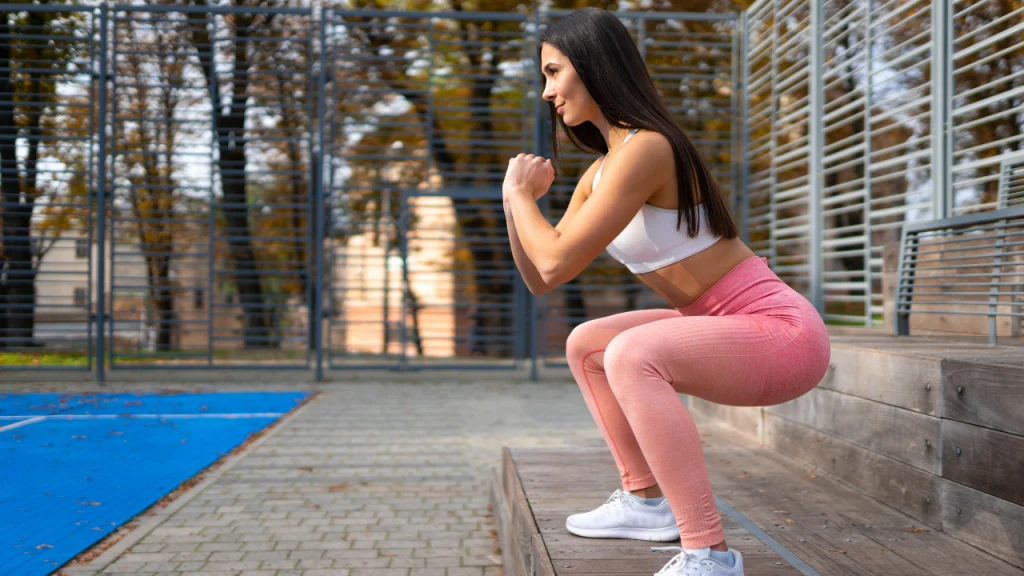
What it trains: thighs, glutes, core
How to do it: – Stand in front of a chair with feet about shoulder-width apart.
– Sit your hips back and down until you lightly touch the chair, then stand back up.
– Keep your chest tall and move slowly.
Make it easier: – Sit fully on the chair for a second, then stand.
– Reduce range of motion.
Make it harder: – Pause for 2 seconds just above the chair.
– Hold a backpack at your chest.
Beginner tip: Starting squats with a chair helps you learn good form and depth with confidence.
Incline Push-Up (Hands Elevated)
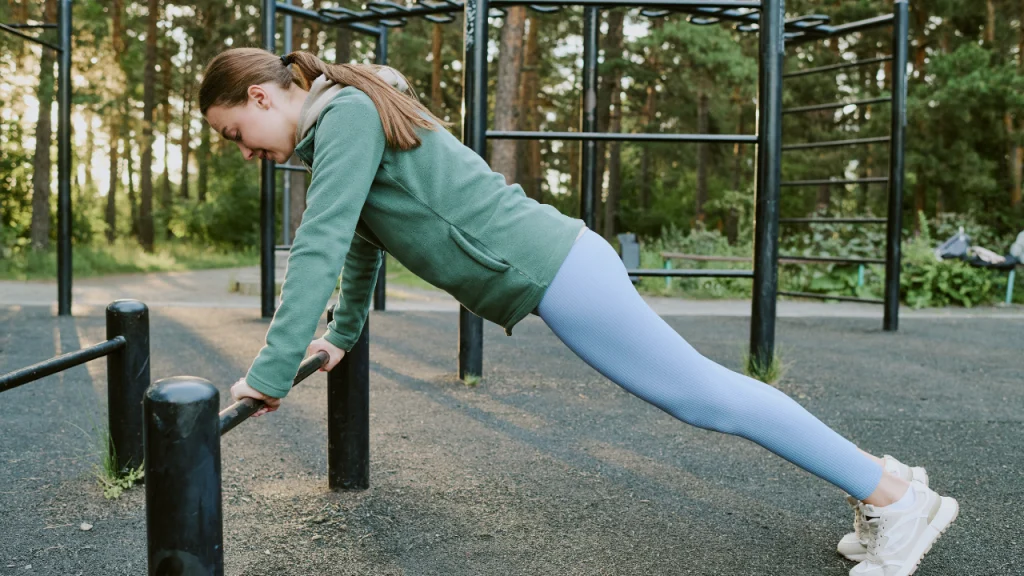
What it trains: chest, shoulders, triceps, core
How to do it:
– Place hands on a sturdy counter or table, body in a straight line.
– Lower your chest toward the surface, then press back up.
– Keep elbows at roughly a 45-degree angle from your body.
Make it easier:
– Use a higher surface (wall push-ups).
– Lower partway.
Make it harder:
– Use a lower surface.
– Slow the lowering phase to 3 seconds.
Beginner note: Many beginner routines use incline push-ups because they build the pushing pattern safely before full push-ups on the floor.
Backpack Row (or Towel Row)
What it trains: upper back, lats, biceps, posture muscles
Option A: Backpack Row
– Load a backpack with a few books.
– Hinge slightly forward (flat back), pull backpack toward your ribcage, then lower slowly.
Option B: Towel Row (Isometric)
– Sit tall, wrap a towel around your feet, pull ends toward you and hold tension for 15–20 seconds.
Make it easier: – Use lighter load or shorter hold.
Make it harder: – Add weight, slow down, or add reps.
Why this matters: A lot of beginner home workouts include pushing (push-ups) but forget pulling. Rows keep your training balanced and help shoulders feel better over time.
Reverse Lunge (or Supported Split Squat)
What it trains: legs, glutes, balance
How to do it:
– Stand tall. Step one foot back and gently lower into a lunge.
– Keep most weight in the front heel.
– Push the floor away to stand.
Make it easier:
– Hold a wall or chair for balance.
– Reduce depth (smaller range of motion).
Make it harder:
– Add a backpack.
– Slow down (3 seconds down, 1 second up).
Beginner tip: If lunges bother your knees, keep the step smaller and the torso upright, or use a supported version.
Glute Bridge
What it trains: glutes, hamstrings, core control
How to do it:
– Lie on your back, knees bent, feet flat.
– Squeeze glutes and lift hips until your body forms a straight-ish line from shoulders to knees.
– Lower with control.
Make it easier:
– Lift only halfway.
Make it harder:
– Hold the top for 2 seconds.
– Do a single-leg version later (not Week 1).
Glute bridges show up constantly in beginner full-body workouts because they build hip strength without stressing the joints.
Dead Bug
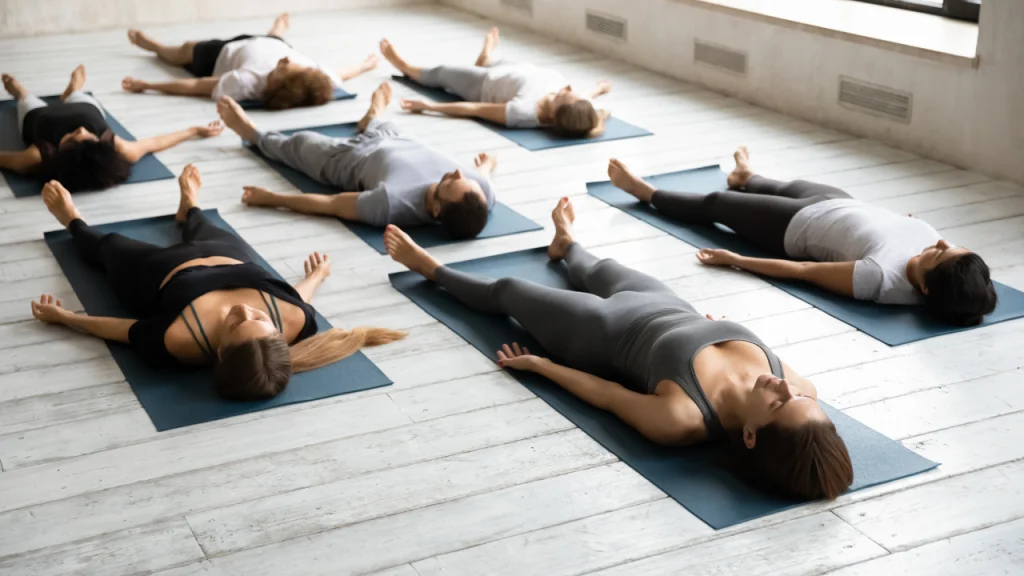
What it trains: deep core stability (without crunching)
How to do it:
– Lie on your back. Arms up, knees bent at 90 degrees.
– Slowly extend the opposite arm and leg away from your body.
– Keep lower back gently pressed into the floor.
– Return and switch sides.
Make it easier:
– Move only your arms, then only your legs.
– Keep range small.
Make it harder:
– Slow down and fully control the return.
This kind of anti-extension core work is featured in beginner full-body sessions because it builds stability that carries over to everything else.
Plank Hold (or Hands-Elevated Plank)
What it trains: core, shoulders, full-body tension
How to do it:
– Elbows under shoulders (forearm plank) or hands under shoulders (high plank).
– Keep ribs down, squeeze glutes, and breathe steadily.
Make it easier:
– Plank from knees.
– Elevated plank (hands on counter).
Make it harder:
– Increase hold time.
– Add shoulder taps (slow and controlled).
Many beginner workouts use planks as a simple way to build whole-body bracing.
Low-Impact Cardio Finisher
Choose one:
– Marching high knees (quiet, controlled)
– Step jacks (step out instead of jumping)
– Shadow boxing (light punches, fast feet)
The goal is to elevate heart rate without the impact of jumping—perfect for apartments and beginners. Low-impact options like these are common in beginner-friendly home workouts designed for small spaces and quiet environments.
Optional Upgrade
If you want this full body home workout to “feel harder” without doing jumpy moves, use one of these upgrades:
– Hold a backpack for squats and lunges
– Use water bottles or light dumbbells for rows
– Slow your reps down (3 seconds down, 1 second up)
– Shorten rest periods slightly
This aligns with the basic idea behind progressive overload: you can progress by adding reps, reducing rest, using harder variations, or increasing time under tension.
How Often Should You Do This Full Body Home Workout?
Most beginners do best repeating a full-body routine 2–3 times per week with rest days in between, especially while learning form. SELF notes a beginner full-body workout can be done two to three times per week, allowing for at least 48 hours between sessions.
Nerd Fitness similarly recommends doing its beginner routine 2–4 times per week and taking 48 hours off between workouts.
On your “off” days, keep it simple:
– easy walking
– gentle mobility/stretching
– light cycling
– anything that feels restorative
For overall health targets, CDC guidance for adults includes 150 minutes/week of moderate-intensity activity and muscle-strengthening on 2+ days/week—so pairing full-body strength sessions with easy cardio is a practical approach.
A Simple 4-Week Progression
Week 1: Do 1–2 rounds. Focus on form and completing the workout calmly.
Week 2: Do 2 rounds consistently.
Week 3: Try 3 rounds once per week (if recovery feels good).
Week 4: Keep 3 rounds OR add a tiny challenge: slower tempo or slightly less rest.
Your goal is sustainable progress, not speed—many beginner programs encourage repeating weeks or workouts if you need more time to master movements.
Common Beginner Mistakes
Doing too much too soon
If you go max effort on Day 1, you often end up sore, discouraged, and inconsistent. Start easier than you think you need.
Skipping pulling movements
If you do push-ups but never row, shoulders often get cranky. Keep push and pull balanced.
Chasing sweat instead of progress
Sweat is not a perfect measure of workout quality. Use progression (more reps, better form, more control) to measure success.
FAQs
Is a 10-minute full body home workout enough?
If 10 minutes is what you can do consistently, it’s enough to build the habit and start improving. Many ranking routines are designed around short time blocks (like 15 minutes) and emphasize that you can get a meaningful session with just bodyweight and smart exercise selection.
Can I do a full body workout at home with no equipment?
Yes. Healthline notes you can exercise at home without equipment using bodyweight strength moves, and it describes bodyweight-focused home workouts as an effective way to build strength and muscle mass and improve fitness.
How do I know if I’m working hard enough?
Use the Talk Test for cardio segments and RPE for overall effort. CDC explains that at moderate intensity you can talk but not sing; vigorous intensity makes it hard to say more than a few words before breathing.
Cleveland Clinic explains RPE as a 0–10 subjective scale that rates how hard your body feels like it’s working.
Should beginners do full body workouts or “split” workouts?
Beginners often do well with full-body sessions because they let you practice foundational movements multiple times per week without getting overly complicated. That “simple and repeatable” structure is exactly what many beginner programs emphasize.
What if I have bad knees or can’t do lunges?
Use supported split squats with a smaller range of motion, or replace lunges with chair squats and slow step-backs. Keep movements pain-free and controlled.
Your Next Step
Pick your version (10, 20, or 30 minutes). Schedule it 2–3 times this week. Then repeat next week, slightly more confident and a little stronger.
If you want a complete week-by-week schedule, publish (or internally link to) your “Home Workout Plan for Beginners” post as the next step after mastering this single full body home workout.
- https://greatist.com/fitness/15-minute-full-body-workout
- https://www.self.com/gallery/full-body-workout-for-beginners
- https://www.nourishmovelove.com/full-body-home-workout/
- https://calisthenics.com/workout-plan/full-body-home-workout-plan-for-beginners-no-equipment/
- https://www.nerdfitness.com/blog/beginner-body-weight-workout-burn-fat-build-muscle/
- https://www.nourishmovelove.com/at-home-full-body-workout/
- https://www.cdc.gov/physical-activity-basics/guidelines/adults.html
- https://www.cdc.gov/physicalactivity/basics/measuring/index.html
- https://my.clevelandclinic.org/health/articles/17450-rated-perceived-exertion-rpe-scale
- https://www.self.com/gallery/beginner-dorm-room-workout
- https://www.healthline.com/health/fitness-exercise/at-home-workouts
- https://www.nike.com/ntc-app
